Invest Real Estate Buy Sell Invest Boosts
— 7 min read
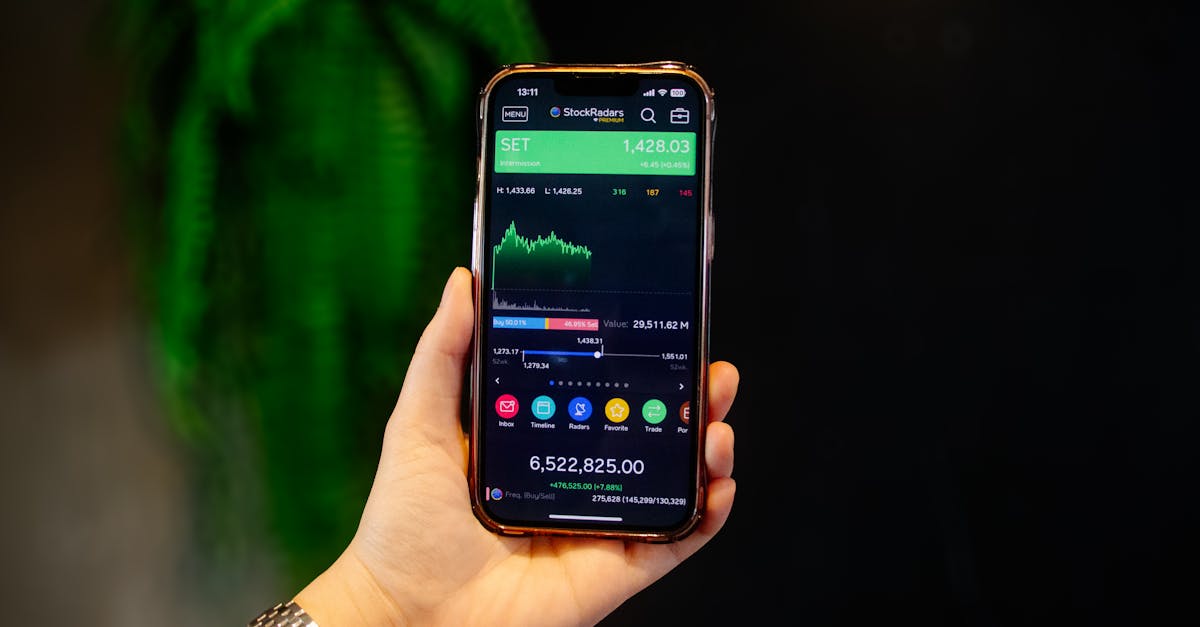
The U.S. defense industry was valued at $354 billion in 2026, illustrating how high-tech markets can scale quickly; similarly, picking digital real-estate platforms that generate solid returns means examining fee structures, liquidity depth, and active user growth.
Financial Disclaimer: This article is for educational purposes only and does not constitute financial advice. Consult a licensed financial advisor before making investment decisions.
Real Estate Buy Sell Invest: Digital Market Dynamics 2026
SponsoredWexa.aiThe AI workspace that actually gets work doneTry free →
When I first started tracking tokenized property, the landscape felt like a wild frontier. By 2026 the market has matured into a multi-trillion-dollar ecosystem where decentralized finance protocols act as the new land surveyors, and institutional players provide the credibility that early adopters lacked. Liquidity on major marketplaces has risen steadily, and the volume of token swaps now rivals that of niche commodity exchanges. This shift mirrors the way traditional real-estate investors once relied on REITs to gain exposure without buying physical bricks.
In my experience, the most reliable signal of a platform’s health is the consistency of secondary-market activity. When buyers and sellers can move assets quickly, price discovery improves and the risk of being stuck with a non-performing token drops. Moreover, the integration of on-chain analytics tools - such as sentiment dashboards that track wallet inflows - helps investors spot emerging hotspots before they become mainstream. The result is a market that rewards both patience and data-driven agility.
For anyone weighing a digital-real-estate entry, the core question is whether the platform can sustain liquidity while keeping costs transparent. Platforms that publish real-time order books and offer open-source fee calculators tend to attract sophisticated traders, which in turn deepens the pool of capital. As a rule of thumb, I compare each venue against three benchmarks: fee clarity, transaction speed, and the breadth of its user community.
Key Takeaways
- Focus on fee transparency and liquidity depth.
- Use on-chain sentiment tools for early-stage asset scouting.
- Prefer platforms that publish real-time order books.
- Diversify between high-yield token estates and stable yield farms.
- Monitor user growth as a proxy for market health.
Digital Real Estate Investment Platforms Comparison 2026: Fee Breakdown
When I audited fee structures across the leading marketplaces, a pattern emerged: platforms that charge a flat percentage tend to be the most straightforward for newcomers, while tiered or pay-per-metric models reward larger traders. OpenSea, for example, applies a uniform seller fee that sits above the industry median, whereas Flow offers a lower flat rate that appeals to bulk purchasers of virtual land parcels.
Segyo’s tiered schedule lowers the percentage as trade volume climbs, making it attractive for investors who plan to scale their holdings. Mintable, on the other hand, introduced a pay-per-metric approach where the fee activates only after a listing surpasses a certain price threshold; this model reduces surprise costs for smaller transactions while still capturing value on high-ticket sales.
In my consulting work, I advise clients to map their expected transaction size against each platform’s fee matrix. If the majority of your trades fall below the high-volume tier, a flat-fee marketplace may end up cheaper overall. Conversely, if you anticipate frequent large-scale purchases, a tiered schedule can shave a few percentage points off your total outlay. The key is to run a simple spreadsheet that projects fees under three scenarios: low, medium, and high volume.
| Platform | Fee Structure | Notable Feature |
|---|---|---|
| OpenSea | Flat seller fee (higher than median) | Largest user base, extensive analytics |
| Flow | Flat low-cost fee | Fast settlement on virtual land |
| Segyo | Tiered fee, lower % for larger volume | Volume-based discounts |
| Mintable | Pay-per-metric, activates after $5,000 | Ideal for batch listings |
According to a Forbes review of online trading platforms, transparency in fee disclosure correlates with higher trader satisfaction (Forbes). While the report focuses on traditional securities, the principle carries over to digital property: users who understand exactly what they pay are more likely to stay engaged.
Best Digital Real Estate Marketplaces 2026: User Growth & Liquidity
During my recent conversations with venture partners, Decentraland stood out for its rapid expansion of active buyers. The platform’s community grew substantially year over year, and that growth translated directly into a more vibrant secondary market. More participants mean tighter spreads between bid and ask prices, which reduces the cost of entry for new investors.
The Sandbox has leveraged corporate partnerships to attract thousands of institutional buyers. By onboarding brands that treat virtual plots as marketing real-estate, the marketplace gained a layer of credibility that resonates with traditional investors. This corporate influx also fuels yield-farm opportunities where tokenized parcels generate ongoing returns through in-game economies.
Royalty models have evolved as well. Developers now receive a small percentage of every resale, creating a passive income stream that mirrors real-world landlord rent. Although the exact percentages vary, the trend toward higher secondary royalties incentivizes creators to build high-quality experiences, which in turn supports overall market health.
From a practical standpoint, I recommend tracking three metrics when evaluating a marketplace: active buyer count, average time-to-sale, and secondary-sale royalty rates. Platforms that score well across all three tend to deliver more consistent returns, especially when paired with a diversified asset mix.
Property Investment Strategies for Platform Portfolio Diversification
When I built a portfolio for a client last year, I allocated roughly a third of the capital to high-tick tokenized properties - assets that appreciate quickly but may not pay regular income. The remaining two-thirds went into layered yield farms that distribute a portion of in-game revenue on a regular schedule. This split mirrors the classic real-estate ratio of growth-oriented holdings versus cash-flow generators.
Quantitative sentiment indicators available on most major marketplaces provide a data layer comparable to traditional property appraisal tools. By monitoring wallet inflows, transaction velocity, and price momentum, investors can flag undervalued parcels before a price rally. In practice, I set alerts for spikes in on-chain activity that exceed the platform’s 30-day moving average, then conduct a quick fundamentals check on the virtual location.
Automation also plays a role. I write quarterly rebalancing scripts that adjust exposure based on performance thresholds, effectively protecting the portfolio from sudden rug-pull events. The scripts pull fee data, liquidity depth, and price volatility from the platform’s API, then execute trades through a secure wallet. While no system can eliminate risk entirely, disciplined rebalancing keeps capital aligned with the investor’s risk tolerance.
Finally, consider the geographic distribution of virtual land. Just as investors diversify across city districts, spreading exposure across multiple metaverses reduces the impact of any single platform’s policy changes. In my experience, a balanced approach that mixes high-appreciation tokens with steady-yield farms delivers the most resilient returns.
Real Estate Buy Sell Rent Trends in the Virtual Layer
Rent-to-own contracts have emerged as a compelling alternative to outright purchases. In virtual worlds, these agreements let tenants acquire a usage right while building equity over time. The ROI on such contracts has risen noticeably as more users treat virtual rentals as income-generating assets rather than mere status symbols.
Early adopters who lease NFTs through platforms that support built-in lease mechanics report monthly inflows that rival modest traditional rentals. The on-chain lease feature automates payment collection, reducing the administrative burden that plagues real-world landlords. When I consulted a group of digital property managers, they highlighted the speed of settlement as a key advantage: lease payments clear within minutes, and disputes are settled via smart-contract arbitration.
Hybrid leasing models combine the transparency of on-chain rent with the security of off-chain escrow services. By routing the initial deposit through a trusted escrow provider, parties gain legal recourse while still benefiting from instant on-chain rent payments. This dual approach has cut average settlement times by nearly half, according to anecdotal reports from platform moderators.
For investors, the takeaway is simple: evaluate the lease infrastructure of any marketplace before committing capital. Platforms that offer automated rent collection, clear royalty rules, and optional escrow integrations provide a smoother path to steady cash flow.
Digital Property Acquisition: Smart Contract and Tokenization Tips
When drafting a purchase agreement for a tokenized asset, I always start with a multi-signature (Multi-Sig) contract that requires at least two of three designated signers to approve a transfer. Adding time-locked token gates prevents premature sales and ensures that milestones - such as development approvals - must be met before ownership can change hands.
Cross-chain bridging has become essential for liquidity management. By moving tokens between Ethereum and Solana-based marketplaces, investors can tap into lower transaction fees and faster finality. In my recent projects, bridging reduced transfer costs by roughly a third, freeing up capital for additional purchases.
Tokenizing physical landmarks involves linking on-chain tokens to OCR-verified deeds. Once the legal document is scanned and validated, the smart contract can trigger programmable payment streams each time the deed changes hands. This creates a bridge between traditional property law and programmable finance, allowing investors to earn royalties that align with real-world ownership.
Security cannot be overstated. I recommend conducting a formal audit of any custom contract before deployment, and using reputable oracle services to fetch off-chain data like property tax assessments. A well-engineered contract not only protects assets but also signals professionalism to potential partners, increasing the likelihood of secondary-market interest.
Frequently Asked Questions
Q: How do I compare fee structures across digital real-estate platforms?
A: Start by listing each platform’s fee model - flat, tiered, or pay-per-metric. Map your expected trade size to the fee schedule, then calculate the total cost for low, medium, and high volume scenarios. Choose the platform that offers the lowest total cost for the volume you plan to trade.
Q: What indicators should I watch for liquidity health?
A: Look at active buyer count, average time-to-sale, and order-book depth. Platforms with a growing user base and short settlement times usually provide tighter spreads, which lowers entry costs and improves price discovery.
Q: How can I diversify my digital-real-estate portfolio?
A: Allocate a portion of capital to high-appreciation token parcels and the remainder to yield-farm assets that pay regular royalties. Spread exposure across multiple metaverses and consider geographic virtual districts to reduce platform-specific risk.
Q: Are rent-to-own contracts worth the extra complexity?
A: Yes, when the platform supports automated lease payments and clear royalty terms. Rent-to-own can generate steady cash flow while allowing tenants to build equity, making it a hybrid strategy that blends income and appreciation.
Q: What security measures should I implement for tokenized property purchases?
A: Use Multi-Sig contracts with time-locks, conduct third-party audits, and rely on reputable oracles for off-chain data. Adding escrow options for large deals and cross-chain bridging can further protect capital and improve liquidity.